



 Log In
LeadTruffle Research
What Gets Home Service Leads to Reply?
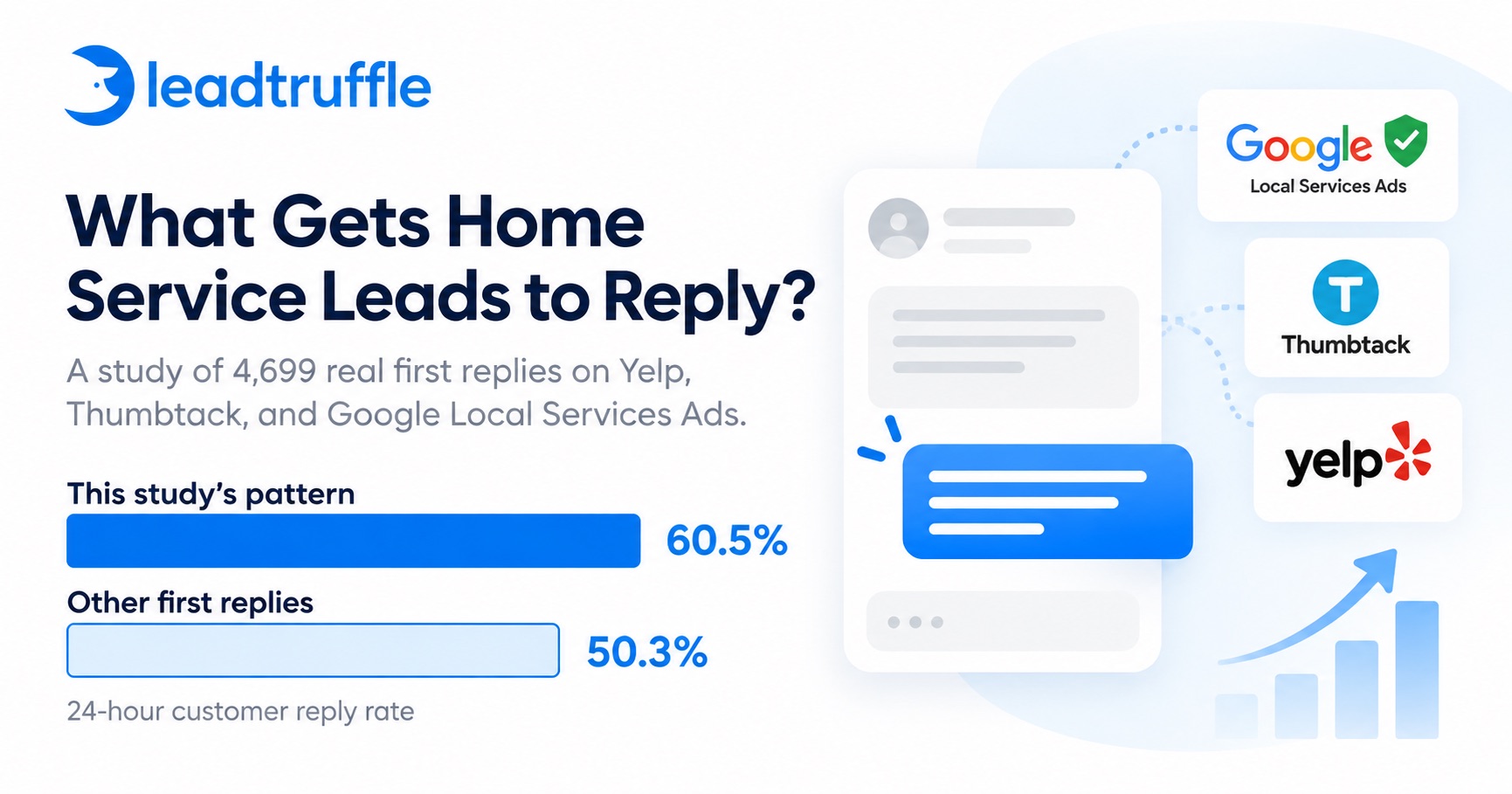
This home service lead response study reviewed 4,699 real first replies sent on Yelp, Thumbtack, and Google Local Services Ads to understand what kind of message gets a customer to respond.
See How LeadTruffle HelpsObservational study, not a marketing claim. Full methodology and limitations are below.
Read the research
Get the benchmark reports
Choose the quick one-page overview or dig into the full study, methodology, and findings.
Primary finding
The pattern that worked everywhere we looked
Across all three channels, first replies that did three specific things were associated with more customers responding.
- Referenced the specific job the customer asked about, not “your request” or “your inquiry.”
- Asked exactly one focused question, not zero and not three.
- Did not immediately ask for a phone number or contact information.
“Thanks for reaching out about [specific job detail]. [One focused question that helps move the request forward]?”
That is it. No script or gimmick, just proof that a human actually read what the customer wrote before replying.
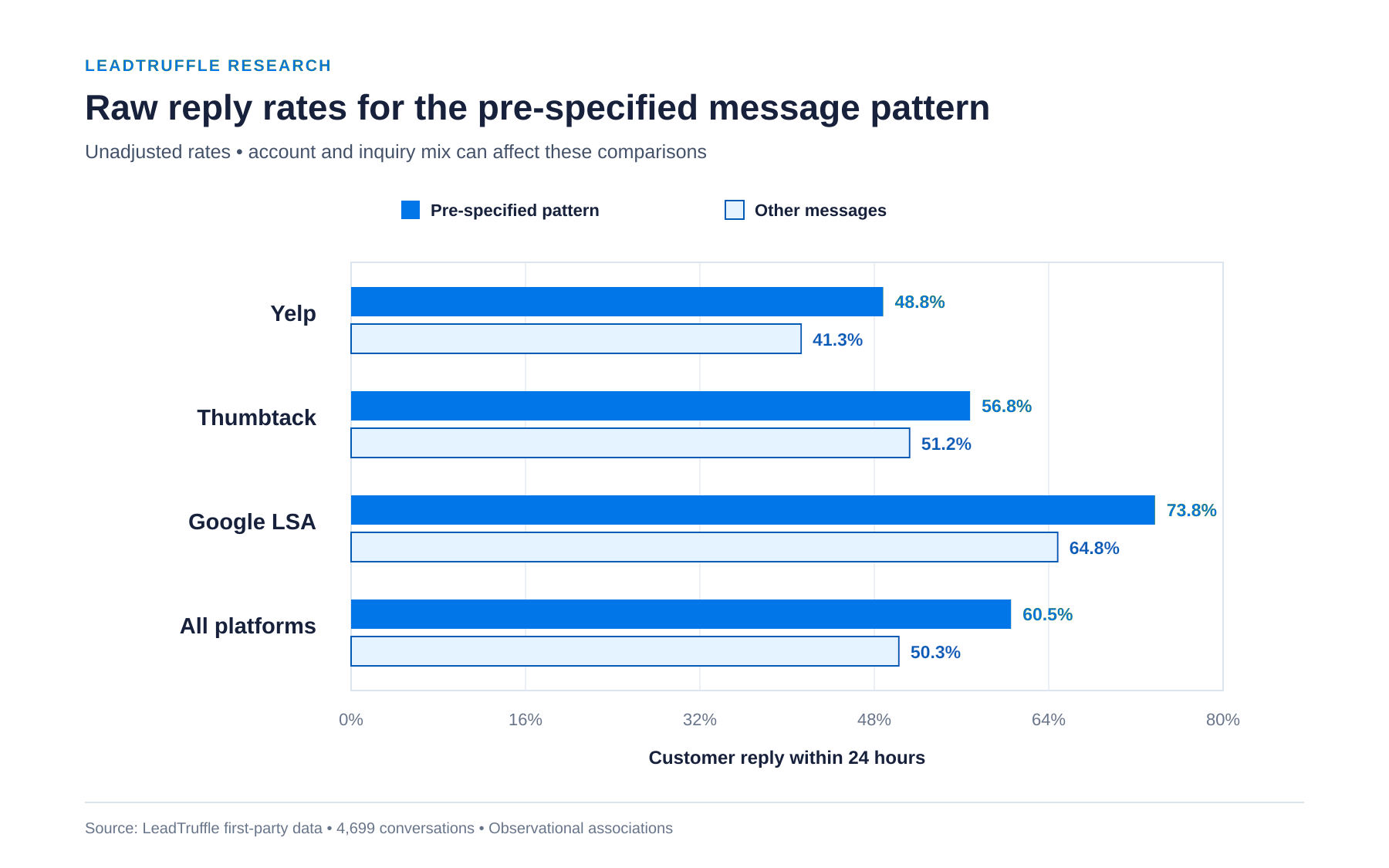
Reading the data carefully
How confident are we, really?
Raw comparisons can mislead. Some contractors get better leads or respond faster regardless of wording, so we compared the same message style within the same contractor account and calculated a confidence range for each channel.
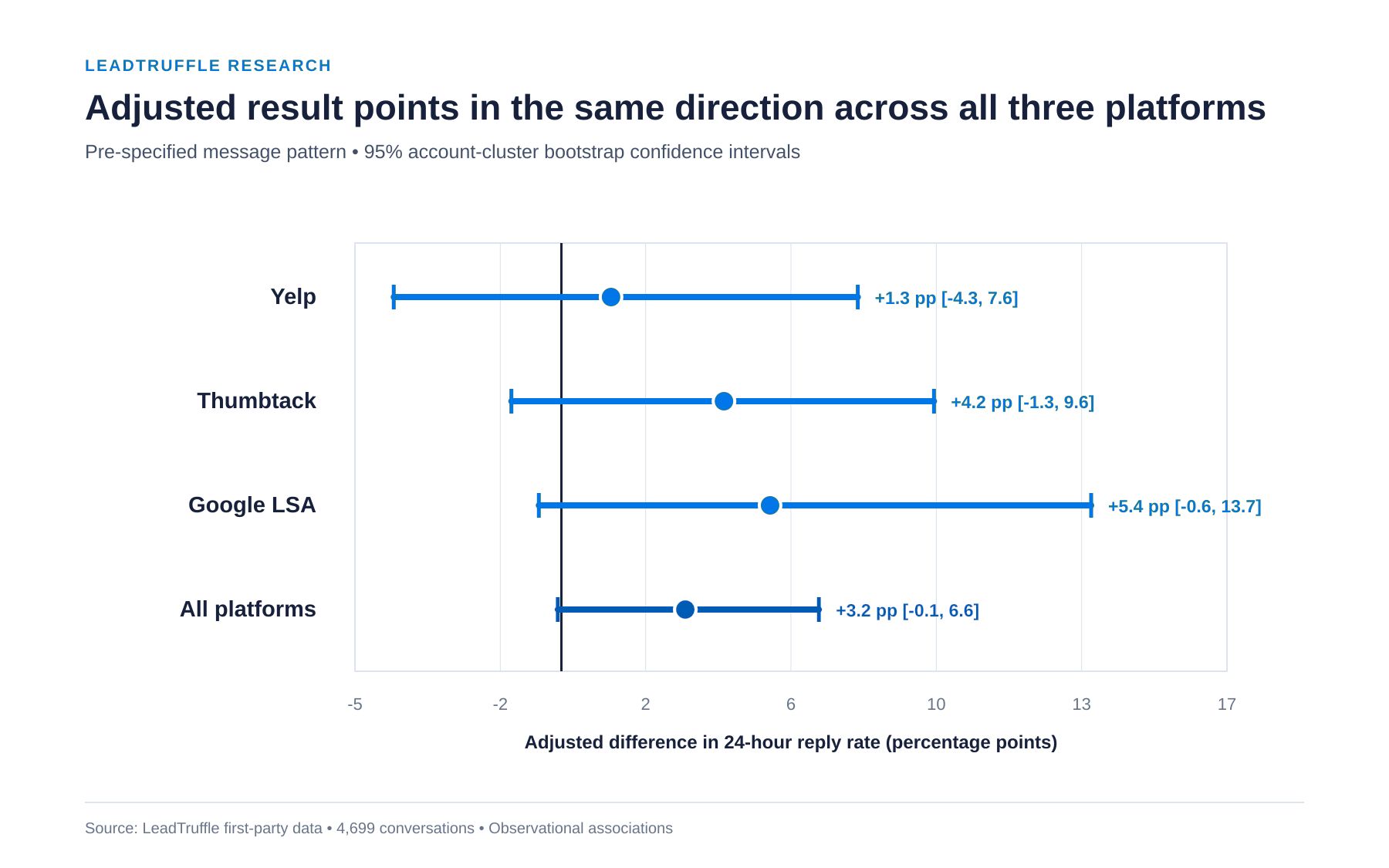
The dot is our best estimate of the adjusted lift. The line is the range we are 95% confident the true effect falls within.
- The direction was positive on every channel and in the pooled result. That consistency across three independent platforms is the central finding.
- The range for any single channel is wide enough to include zero. We cannot claim statistical certainty for Yelp, Thumbtack, or the pooled estimate alone.
We published this chart because clarity matters more than a cleaner marketing story. The pattern did not hurt on any channel and pointed the same direction across all three.
On Thumbtack, the details you name matter more than almost anything else
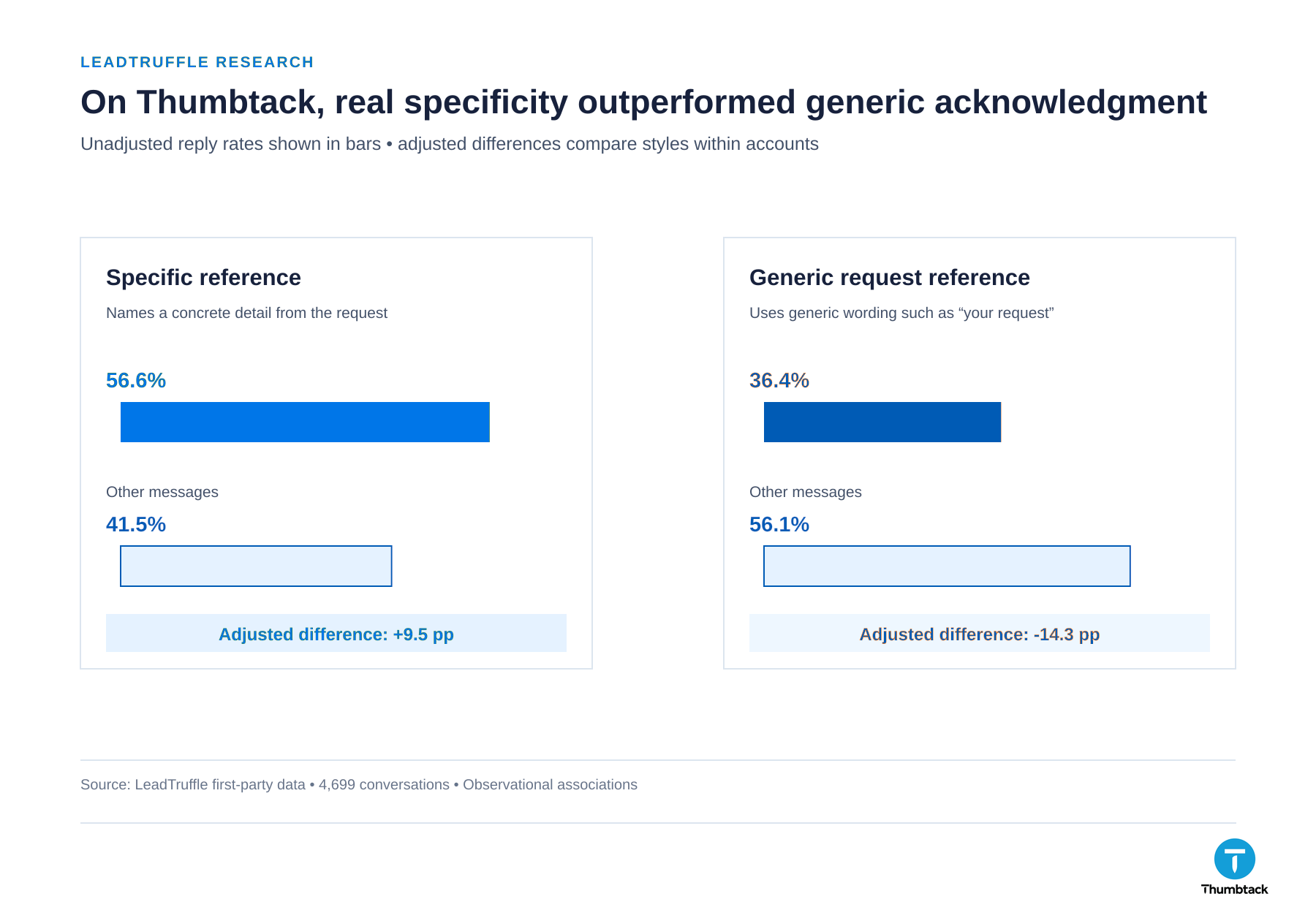
Naming a real, concrete detail from the customer’s request was associated with a +9.5 point adjusted lift. Generic phrasing cost an adjusted -14.3 points, a roughly 24-point swing based on specificity alone.

A note on Yelp
Yelp customers responded slightly better to two questions instead of one. Asking for a phone number early was the worst single move on Yelp, at -18.7 pooled points.
A note on Google LSA
Short, specific replies of 16 to 30 words outperformed longer ones, and this channel showed the largest adjusted response to the main pattern.
Exploratory finding, still being tested
One more thing we noticed on Google LSA
This next result is not part of the confirmed, pre-specified finding above. We are flagging it clearly because it deserves more testing before anyone treats it as proven.
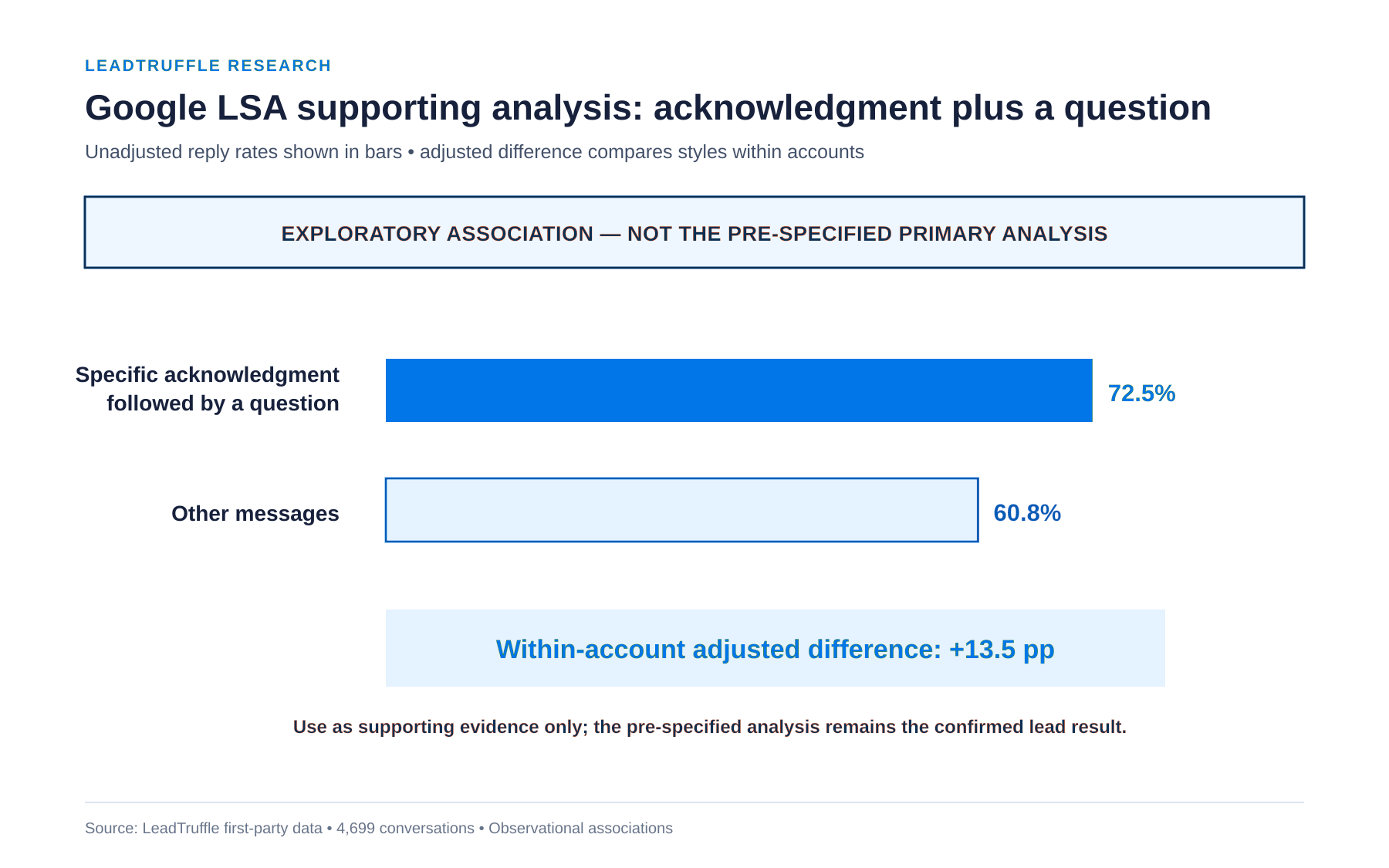
Replies that specifically acknowledged the request and followed with a question showed a notable association on Google LSA email leads. It is promising, but it remains secondary and exploratory.
The reverse pattern hurts too
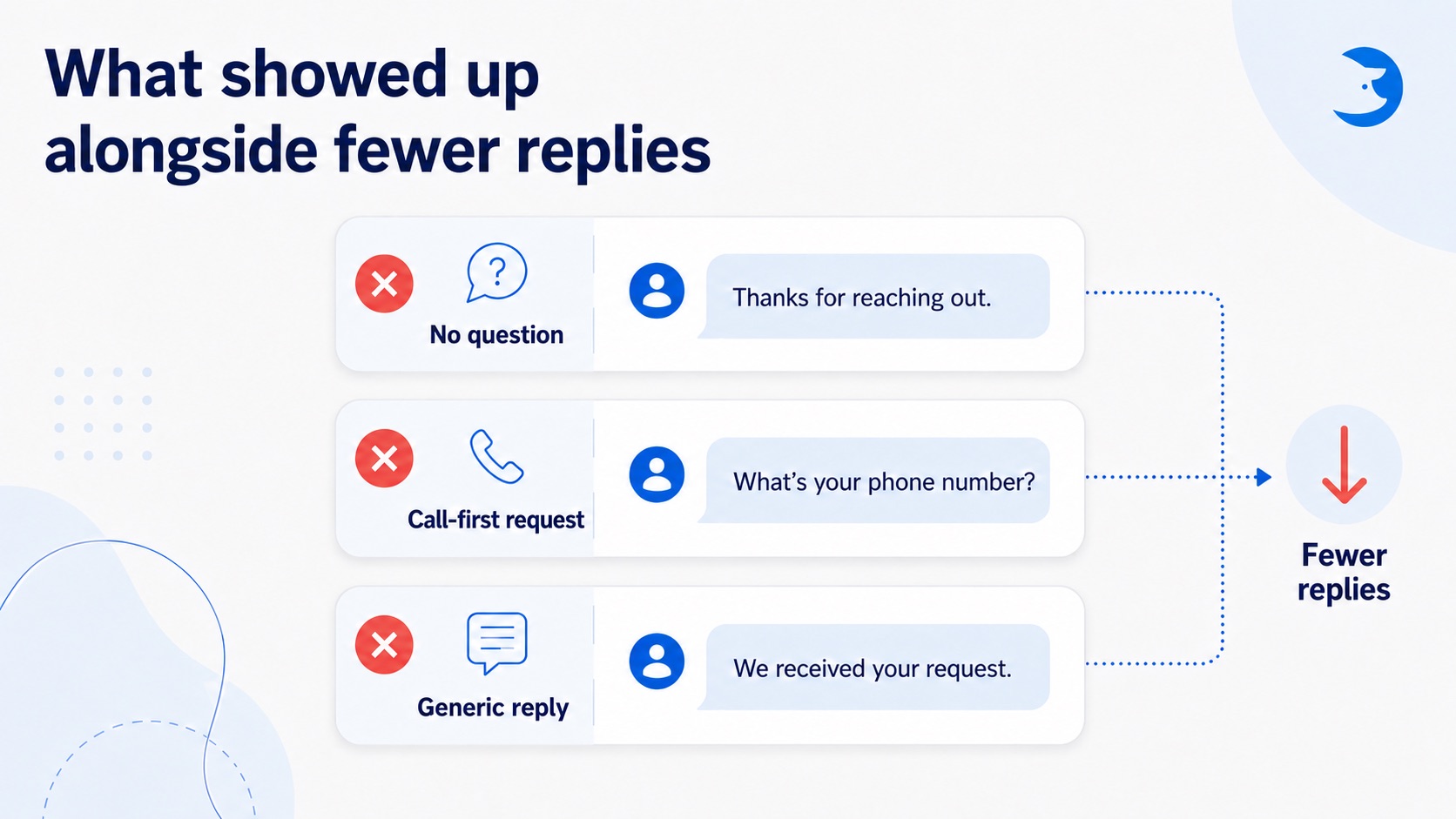
Across the full dataset, a few things consistently showed up alongside fewer replies.
- Zero questions in the reply, a pure acknowledgment with no next step
- Asking for a phone number or a call before answering anything
- Generic, copy-paste-sounding replies that do not reference the actual job
Being honest about the limits
We would rather you trust this data than be impressed by it.
- This measures replies, not bookings. A customer responding is not the same as a customer hiring you.
- This is observational, not a controlled experiment. We cannot say the message caused the reply, only that the two are associated.
- Confidence intervals are wide per channel. The strength is consistency across three channels, not certainty on any one.
- The labels come from an AI classifier, not human reviewers. Test-retest agreement was high for concrete labels and lower for subjective calls like customer intent.
- This is a targeted sample, not a random one. It was intentionally sampled to ensure enough data per channel.
This is what LeadTruffle does automatically, on every lead
You do not have to write these replies by hand. LeadTruffle reads the job details a customer submitted and sends a first response built on the same pattern: specific, one clear question, and no forced ask for a phone number.
Get a DemoFrequently asked questions
Does this mean I should always ask exactly one question?
Not always. Yelp customers responded a bit better to two questions. The idea that held up everywhere was simpler: be specific about the job, ask a real question, and do not make the customer give you their number before you have answered anything.
Should I ask for a phone number in my first reply?
Our data says wait. Asking for a phone number before answering anything was one of the strongest patterns linked to fewer replies on every channel we checked, and the worst single move on Yelp specifically.
Is this the same as more booked jobs or more revenue?
No. This measures whether the customer replied within 24 hours. We did not have reliable booking or revenue data for this study.
How sure are you about these numbers?
We are confident in the direction and more careful about the exact size of the effect. The published confidence-interval chart shows the per-channel ranges are wide.
How did you protect customer privacy?
Names, phone numbers, emails, addresses, and other identifying details were removed before any message was analyzed. We do not publish raw conversation text or account names.
Who reviewed the messages?
An AI classifier reviewed structural features, such as question count, job specificity, and contact-detail asks. Reliability was higher for concrete features than for subjective judgment calls.